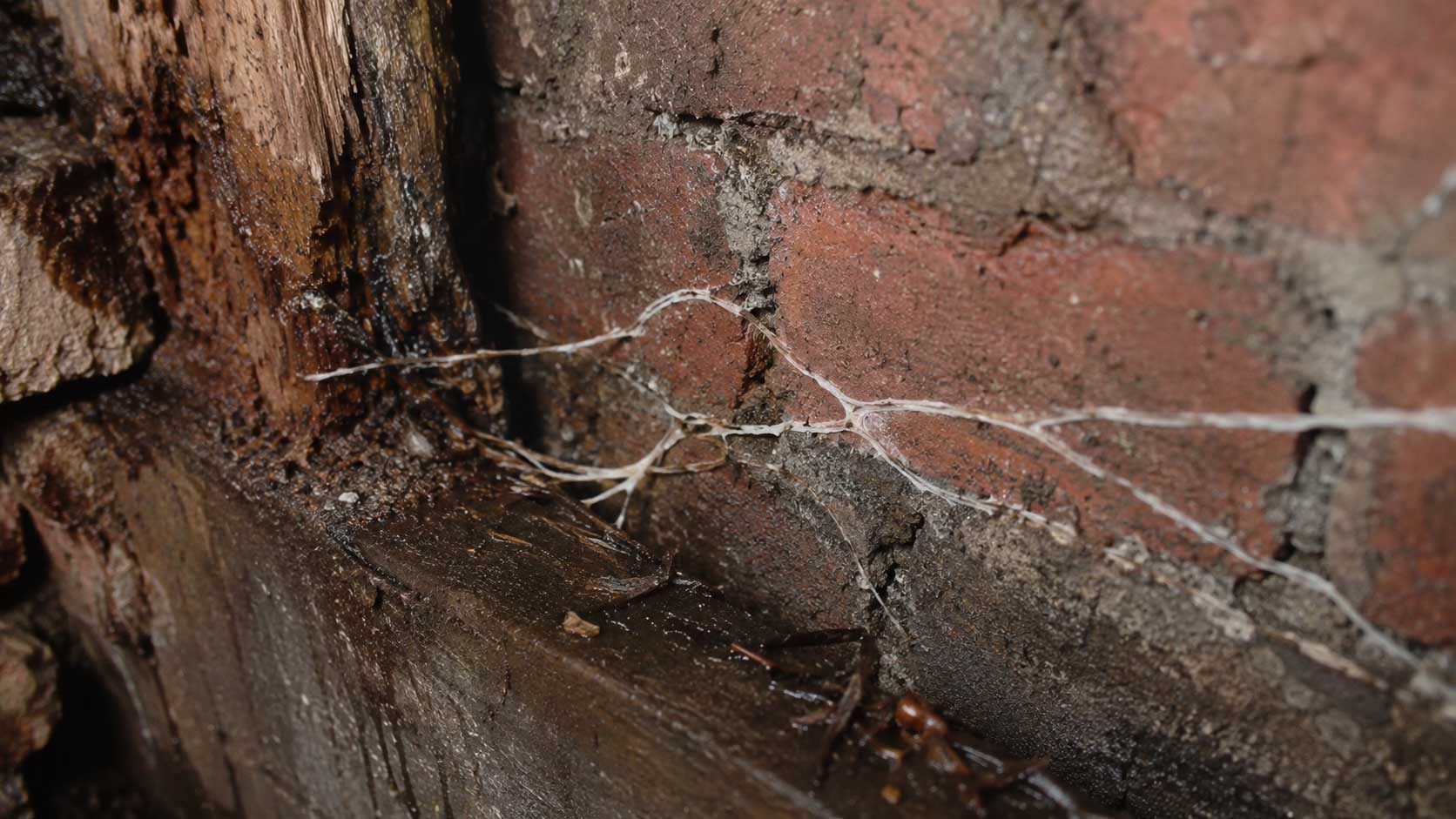
What is dry rot?
Why the name is misleading, what the fungus does and why moisture control comes first.
Rotten timber is usually the result of another building problem. A leaking roof, wet wall, plumbing defect or lack of ventilation may have been keeping the wood damp for months or years before the damage became obvious.
TimberDecay.co.uk is built around diagnosis first: identify the moisture source, decide whether fungal or insect damage is active, then work out how much timber has actually lost strength.
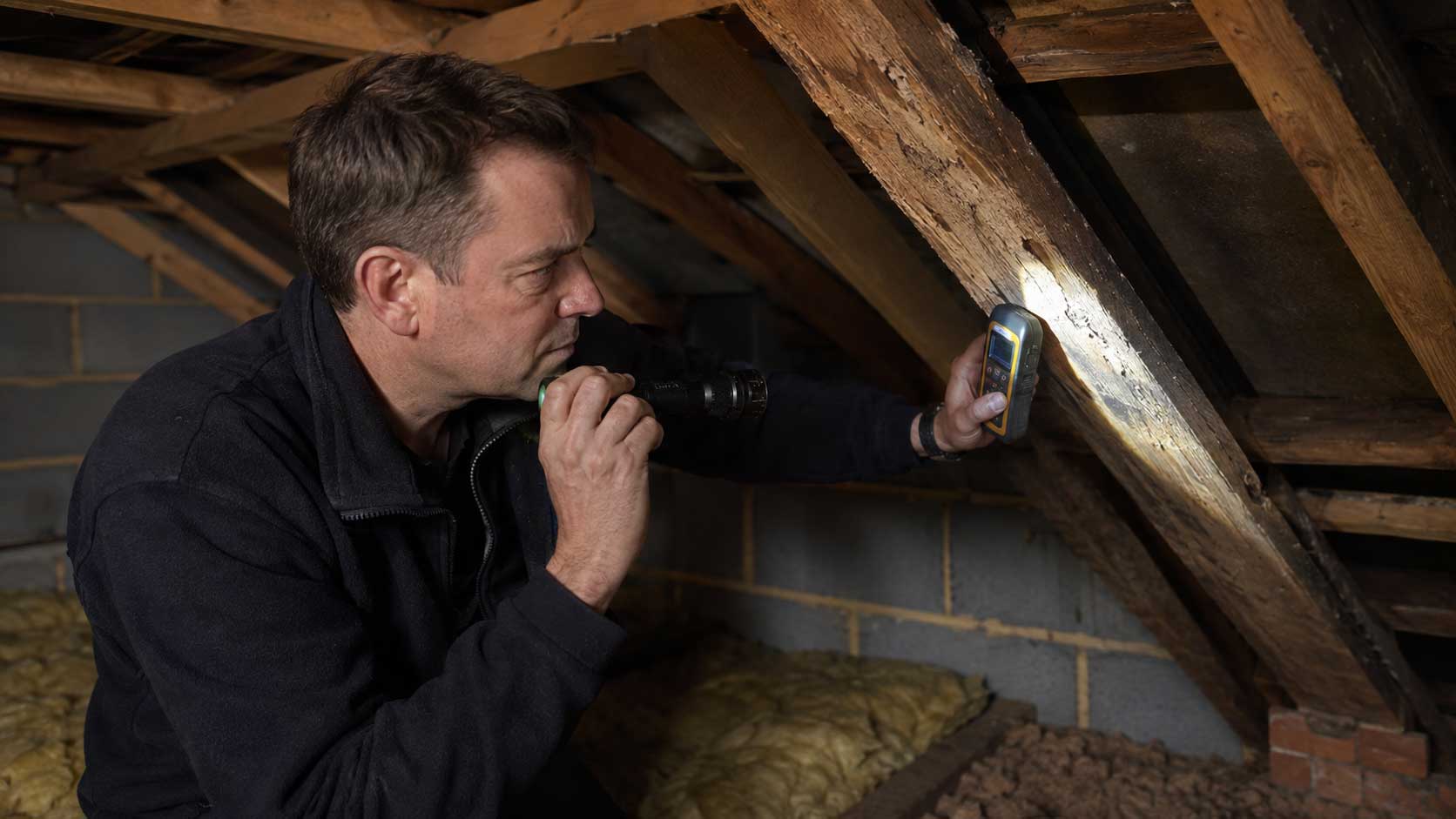
Historic woodworm holes can remain after an infestation has ended. Dry rot and wet rot both need moisture. Dark timber is not automatically rotten.
Different signs point in different directions. A soft joist, old beetle holes and fungal growth do not all call for the same response.
Why the name is misleading, what the fungus does and why moisture control comes first.
How the pattern of growth and damage differs.
Old holes can remain long after beetles have gone.
Why decay often starts where structural timber enters damp masonry.
Follow moisture, inspect concealed bearings and separate old damage from current activity.
What block-like cracking can mean and what it does not prove.
Why suspended floors can hide decay until movement appears.
Use readings as part of the evidence, not as the diagnosis.
Historic England's guidance makes the same practical point repeatedly: fungal decay depends on moisture, old insect holes do not prove current activity, and treating timber without correcting the source of damp can leave the real defect untouched.
A roof leak, blocked gutter, damp masonry or plumbing problem may therefore be more important than the fungus you can see.
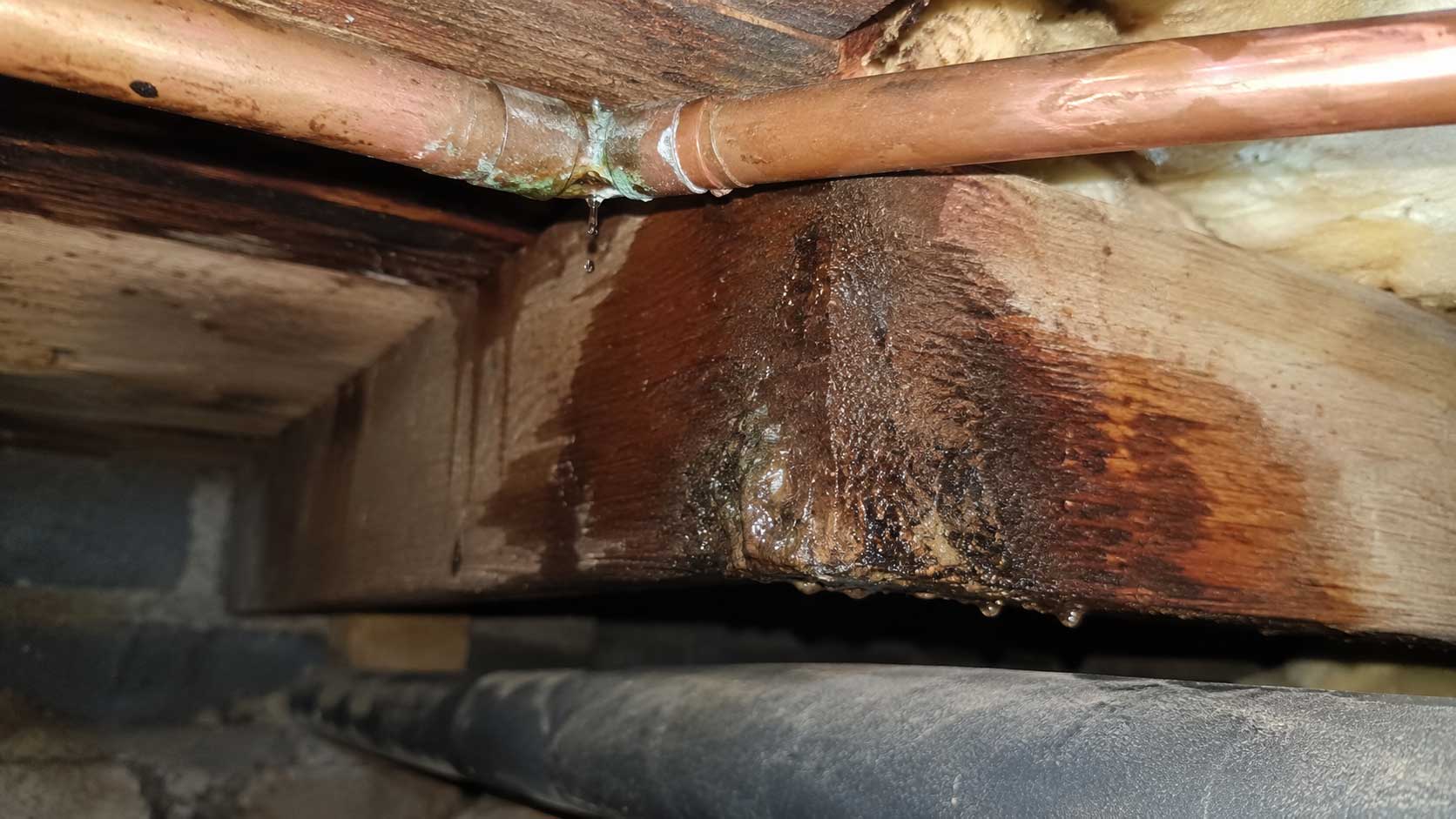
A brittle joist end, white fungal growth and beetle holes can all appear in the same building, but they do not necessarily have the same cause or need the same repair.
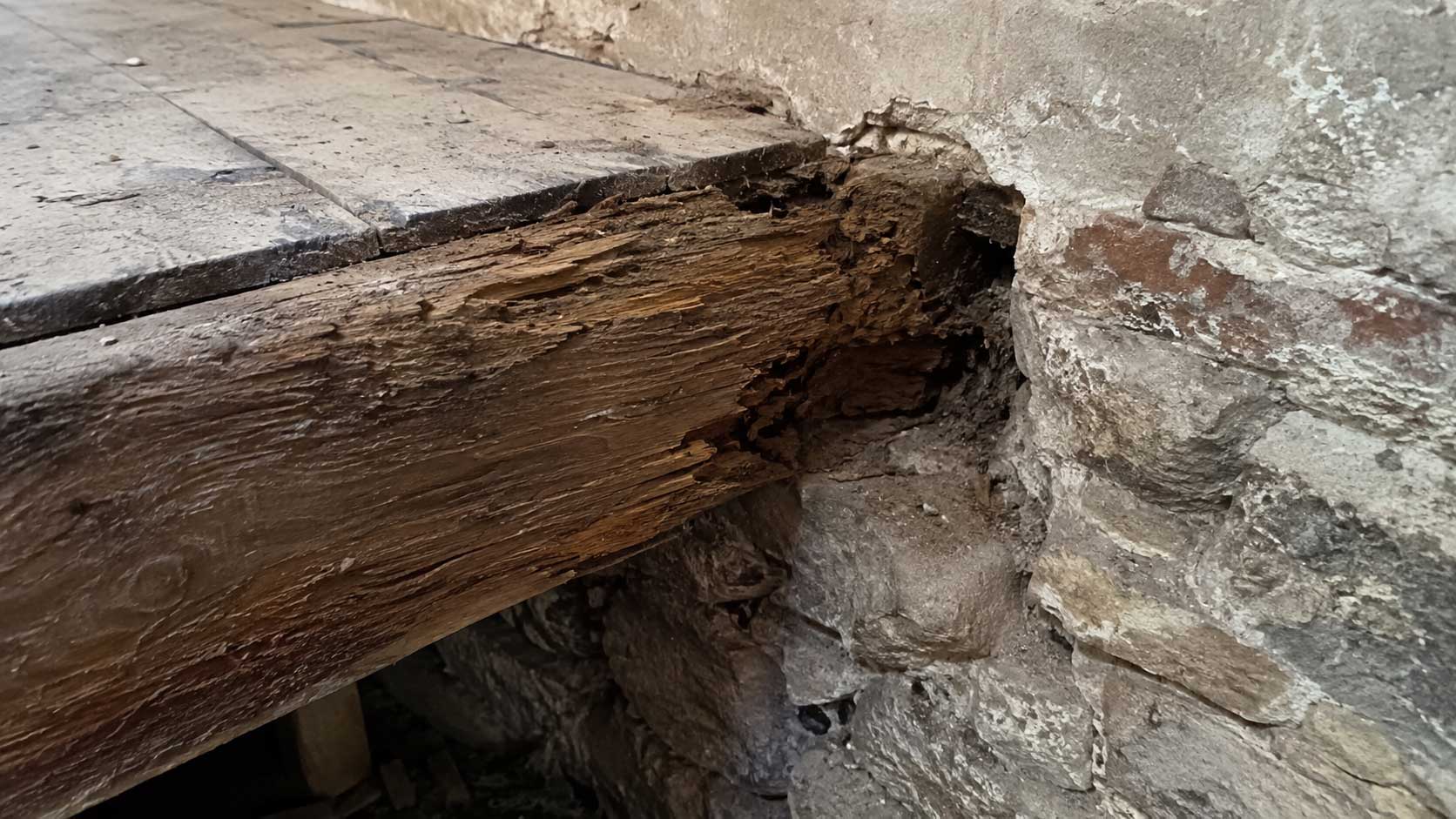
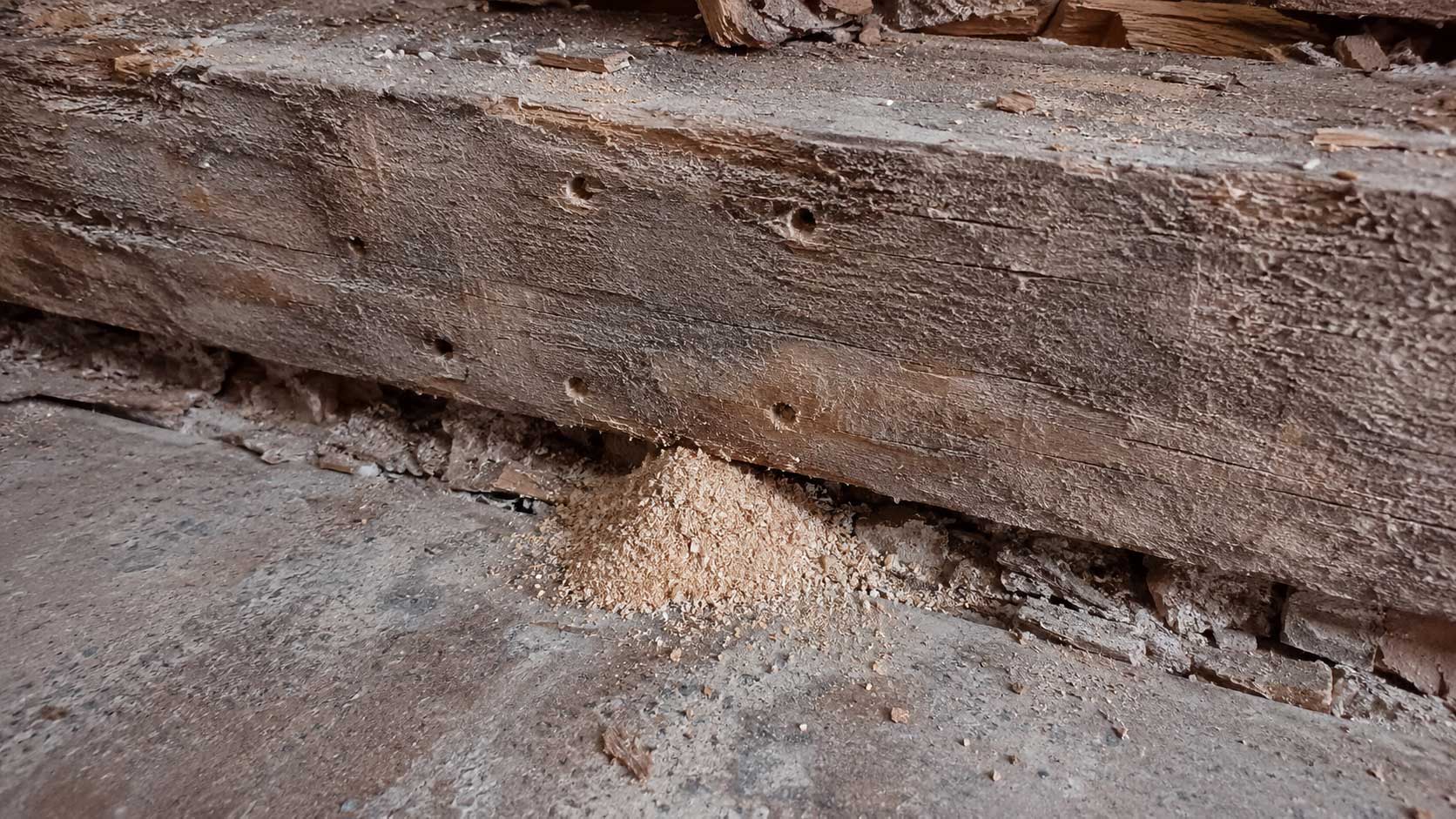
Exit holes can remain visible for decades. Fresh frass, newly appearing holes and live beetles are much more useful evidence when deciding whether an infestation is still active.
Dry rot strands and mycelium can cross damp masonry while searching for more timber. Where growth disappears behind plaster or into a floor void, nearby concealed timbers deserve checking.