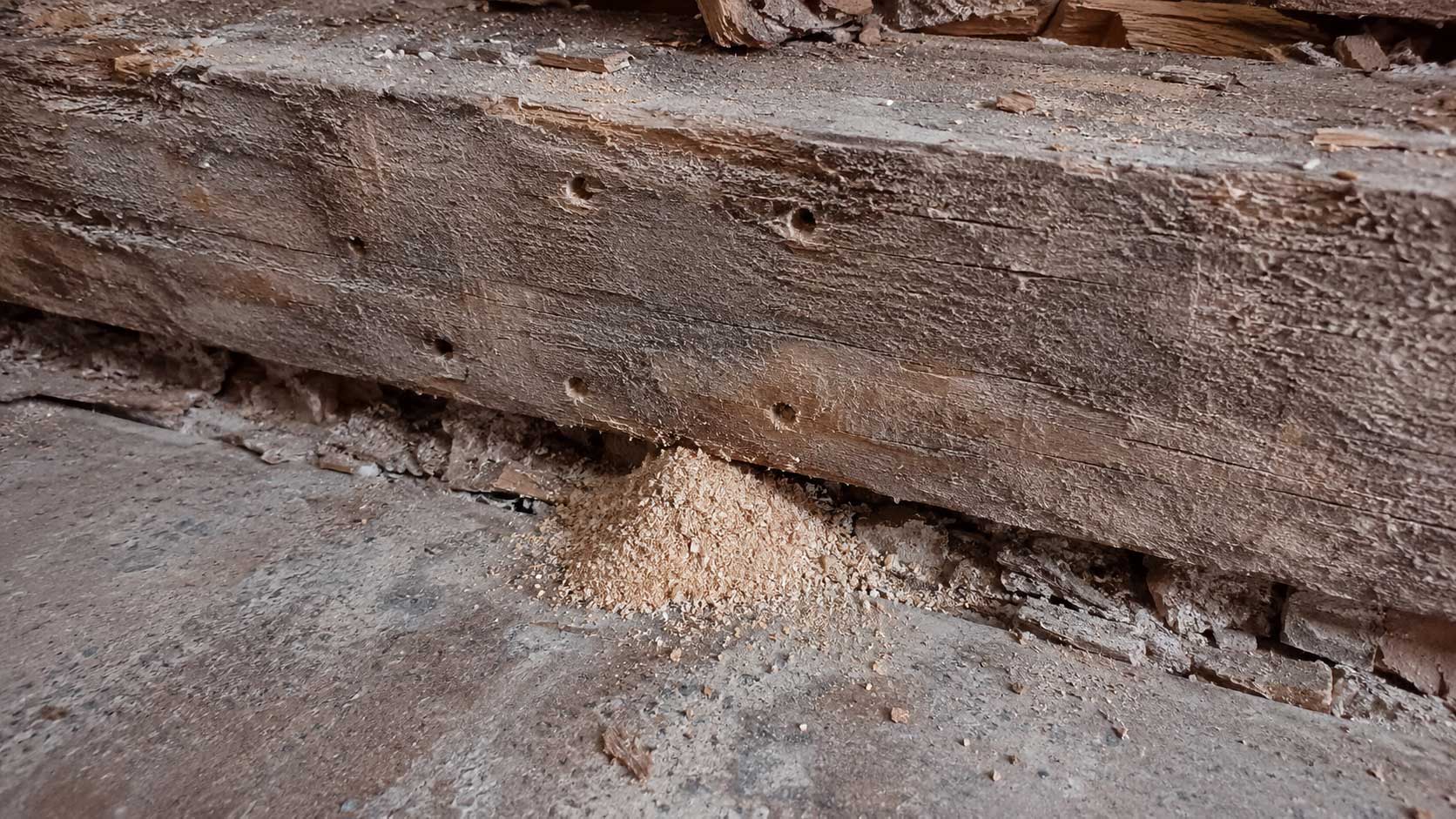
Do not date an infestation from holes alone
A roof beam can carry flight holes from an infestation that ended decades ago. The holes may darken with age, paint or dirt, but colour is not a precise dating method.
Fresh frass is useful evidence
New powder or pellets appearing below holes can indicate current activity, although dust from building work or vibration can also shake old material out of galleries.
Watch over the emergence season
Where activity is uncertain, monitoring can be more useful than immediate blanket treatment. Fresh holes, captured insects or new frass over time give stronger evidence than one inspection.
Check dampness as part of the survey
Some species are associated with damp or previously decayed timber. A roof or floor moisture problem may therefore be part of the reason the insect attack developed.
Useful technical sources
These links provide background guidance. A particular building still needs its own inspection.