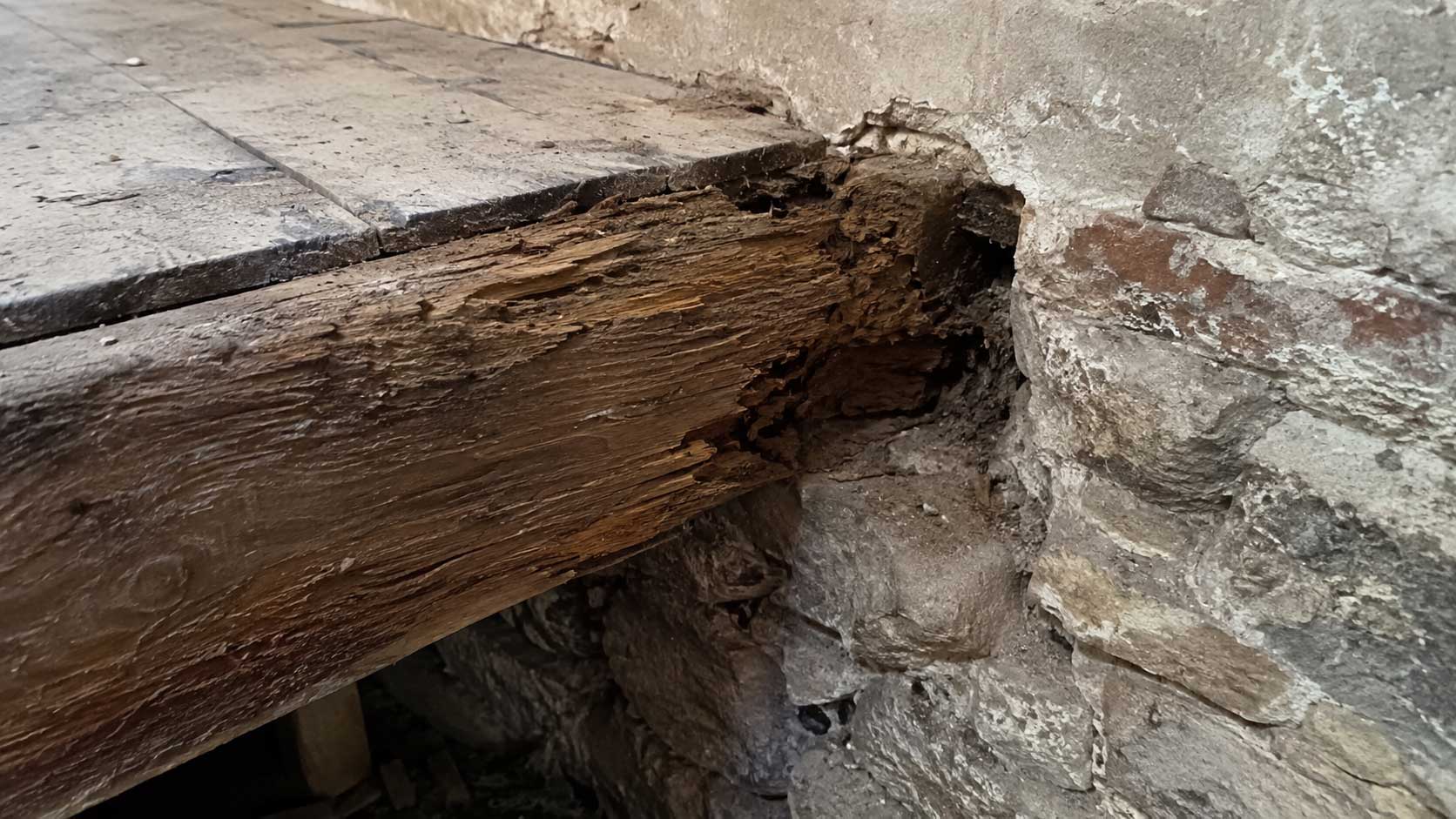
The weakest area may be inside the wall
A joist can look sound several inches away from the wall while the concealed end has largely disappeared. Floors that drop or flex close to an outside wall should be investigated at the bearing.
Not every joist needs total replacement
If decay is genuinely local and the remaining timber is sound, repairs may involve cutting back, strengthening or replacing only the damaged section. The correct method depends on loading, access and the condition of the surrounding structure.
Neighbouring joists should be checked
A shared moisture source can affect several bearings along the same wall. Finding one rotten joist end is therefore a reason to inspect the next joists rather than assuming the problem is isolated.
Drying and ventilation are part of structural repair
The timber repair will not last if the wall stays wet or the underfloor void cannot dry. Restoring airflow and stopping moisture ingress can be as important as the carpentry itself.
Useful technical sources
These links provide background guidance. A particular building still needs its own inspection.