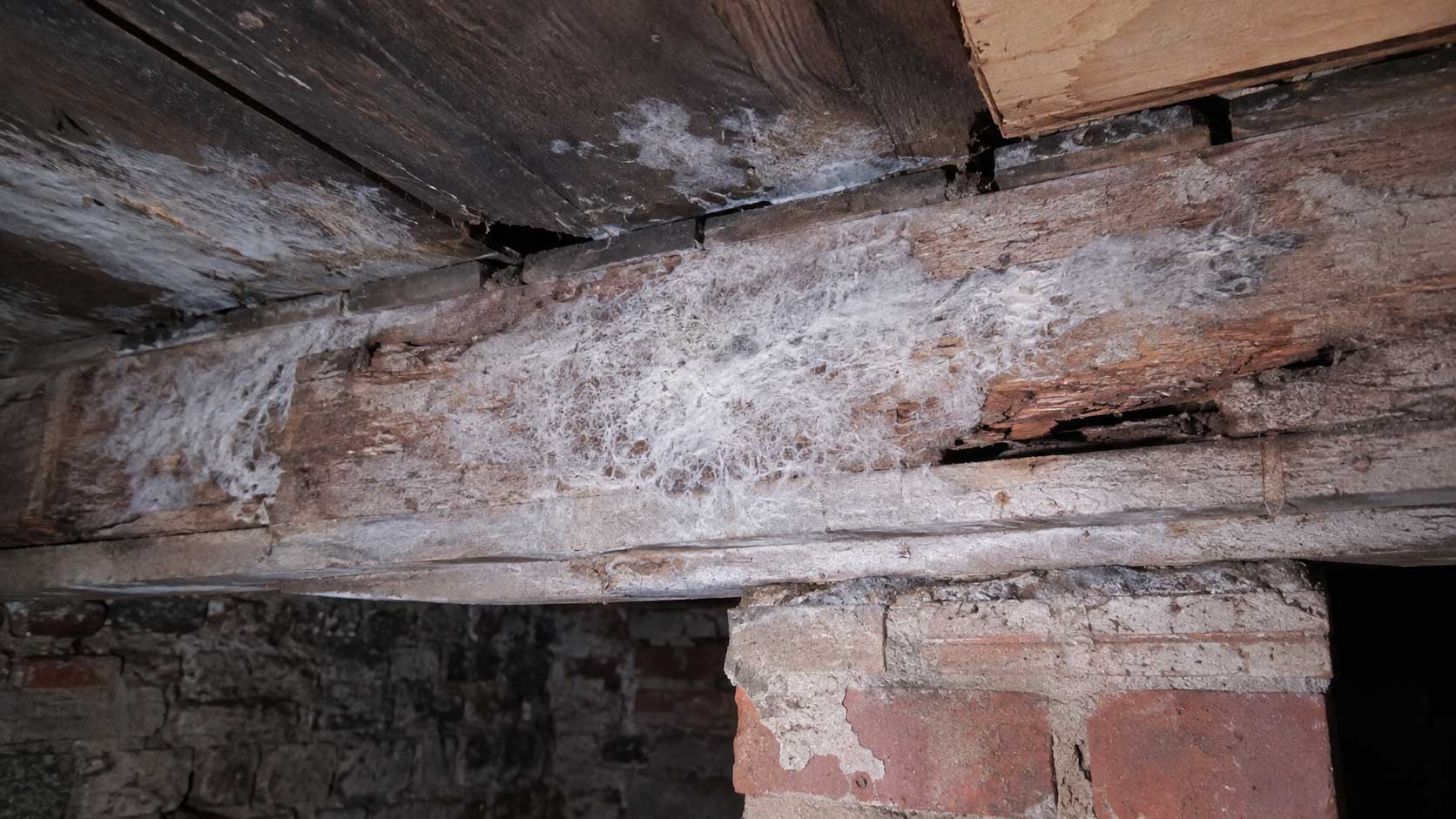
The name is misleading
Dry rot does not mean rot that grows in dry timber. The fungus needs damp conditions to establish and continue attacking wood. In buildings, that moisture usually comes from a defect such as a roof leak, plumbing leak, damp wall or restricted ventilation.
Why it causes concern
Dry rot can damage structural timber and may extend through hidden areas before it is discovered. Mycelium and strands can grow across adjacent masonry while seeking suitable conditions, which is one reason the visible patch may not show the full extent.
What the timber can look like
Affected timber may become dark, brittle and cracked into roughly cuboidal blocks. The fungus can also produce pale mycelium, strands and eventually a fruiting body that releases large numbers of spores.
The moisture source still comes first
Removing decayed timber without dealing with the water source leaves the conditions that allowed the fungus to develop. A proper investigation therefore looks beyond the fungus to the roof, plumbing, masonry, ventilation and other sources of persistent dampness.
Useful technical sources
- Historic England — Timber Decay in Buildings and its Treatment
- Historic England — Timber Treatments and Pest Control
These links provide background guidance. A particular building still needs its own inspection.