Persistent moisture is the usual starting point
Building timber is food for decay fungi, but in a normal dry building the missing ingredient is water. Timber becomes vulnerable when it remains damp for long periods or is repeatedly wetted before it has time to dry.
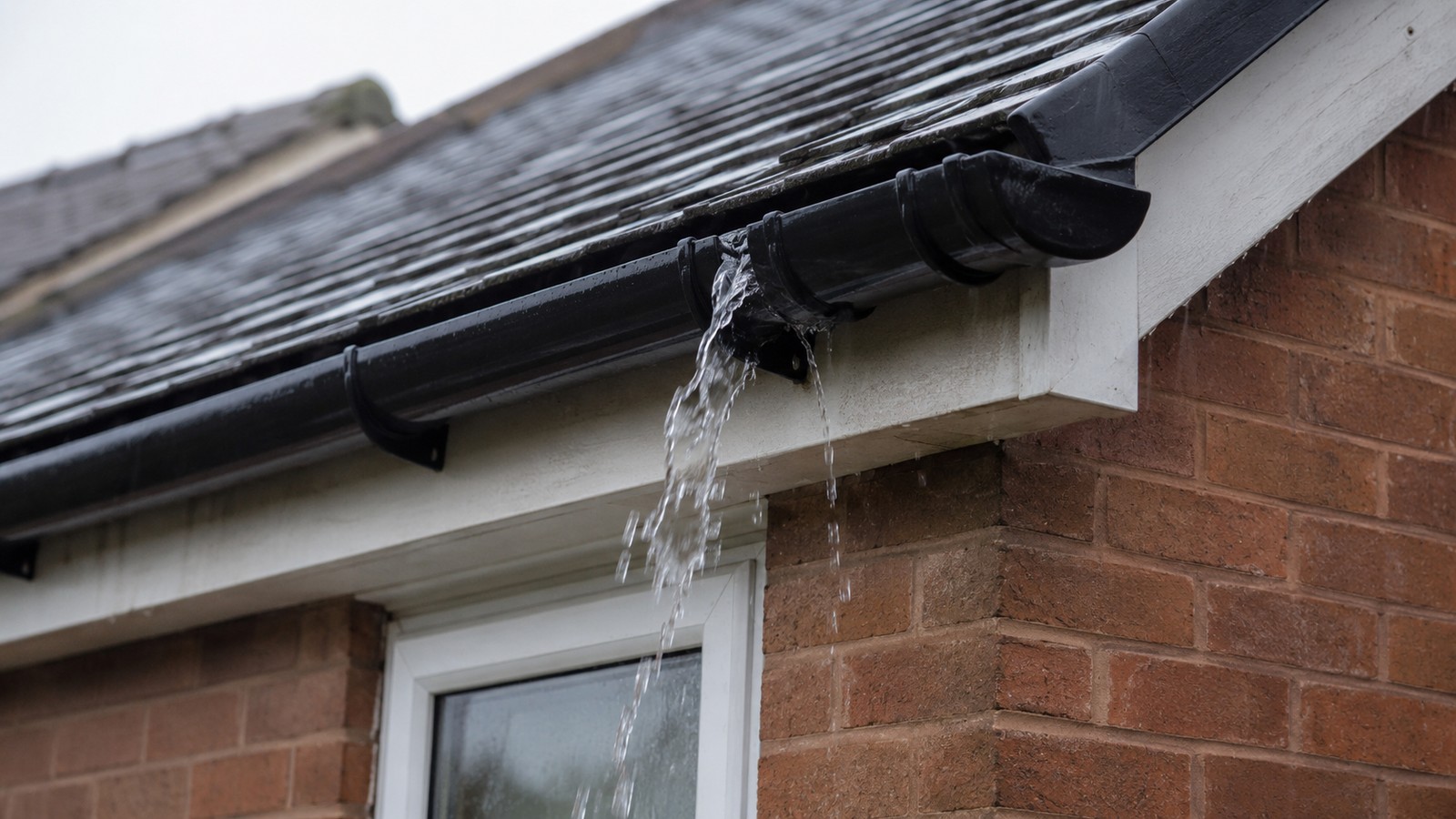
A small maintenance defect can therefore become a serious timber problem if it keeps the same area wet for long enough. A gutter joint that leaks onto one wall for several winters can damage the ends of floor joists even though the gutter itself looks like a minor fault.
Common sources are often some distance away
Rain can travel down a cavity or along a roof underlay before reaching timber. Plumbing water can run beneath flooring before collecting around a joist. Moisture may therefore be entering the building somewhere other than the visibly rotten area.
A useful inspection follows the damp back towards its source instead of assuming the nearest wall or pipe must be responsible.
Ventilation affects how quickly timber dries
Suspended timber floors depend on air movement below the boards. If air bricks are blocked by paving, soil, insulation or later alterations, moisture can remain around joist ends and sleeper walls for much longer.
Lofts have a similar problem when warm moist air enters the roof space but cannot escape. The resulting condensation may wet rafters and underlay over a wide area.
Some repairs trap moisture
Impermeable finishes can make matters worse in older buildings by preventing damp materials from drying in the way they originally did. Dense cement, non-breathable coatings and poorly detailed lining systems can all alter the moisture behaviour of a wall.
The right repair therefore depends on the building as well as the fungus. Drying the structure and removing the moisture source may be more important than applying chemicals.
Useful technical sources
- Historic England — Timber Treatments and Pest Control
- Historic England — Damp in Historic Buildings
- Historic England — Materials for Historic Building Repairs
These links provide background guidance. A particular building still needs its own inspection.