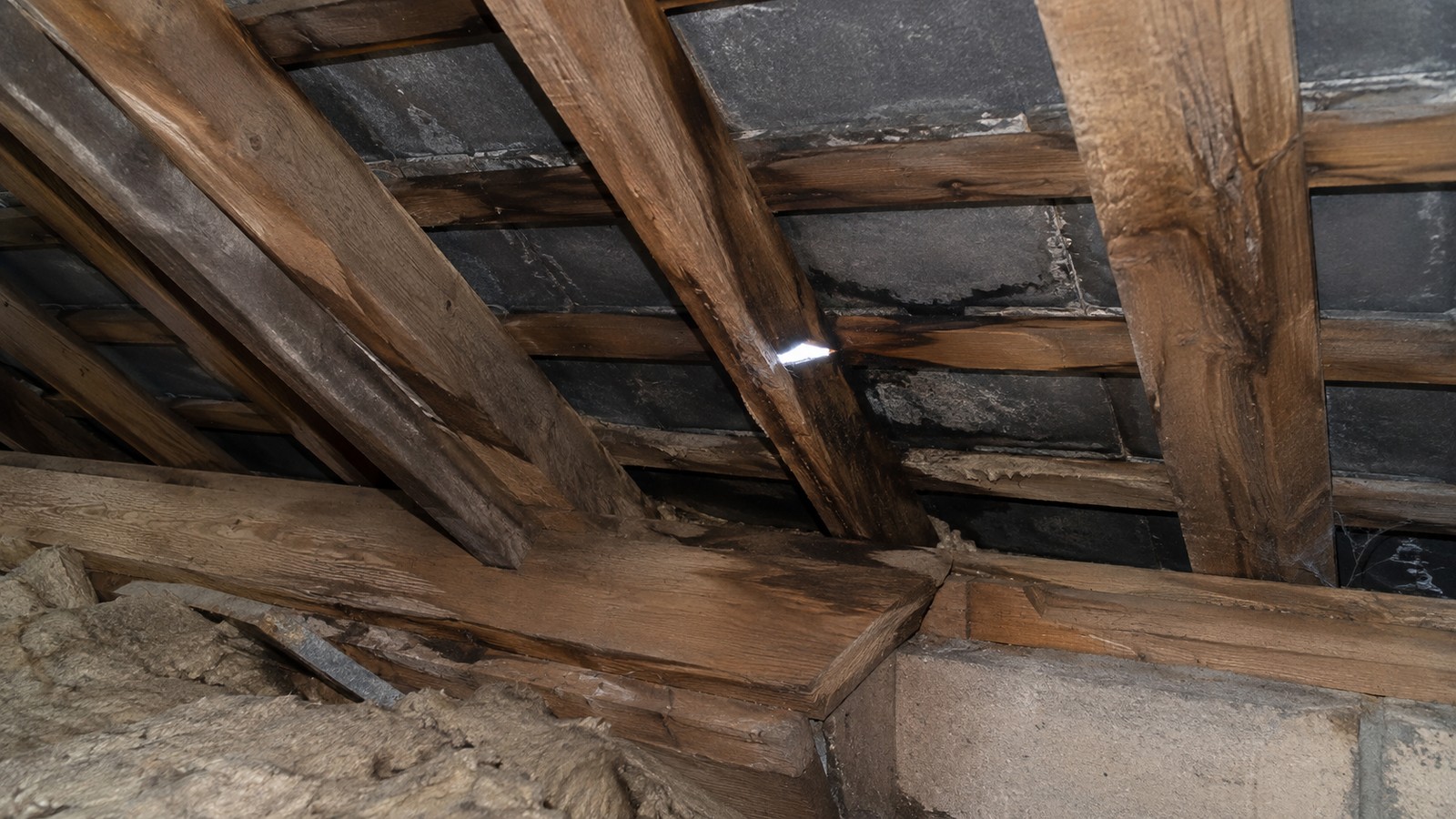
Timber does not rot simply because it is old
Old structural timber can remain serviceable for a very long time if it stays reasonably dry. Trouble begins when moisture is introduced and cannot escape. A leaking roof, gutter, pipe, shower, damp wall or blocked air brick can all create the conditions in which fungal decay becomes established.
That distinction matters. Dark colour, old beetle holes or a rough surface do not prove that timber is currently decaying. The timber needs to be looked at in context: is it wet now, has it lost strength, is fungal growth active and is the cause of the moisture still present?
Fungi and insects need different conditions
Fungal decay depends heavily on moisture. Wood-boring beetles are more complicated because different species favour different timbers and moisture conditions. Historic flight holes can remain visible long after an infestation has ended.
For that reason, treatment should not be chosen from appearance alone. A survey should establish what organism is involved, whether it is active and how much structural timber has actually been damaged.
The source of moisture is part of the defect
If a joist end has rotted where it enters a wall, replacing the joist without dealing with the damp masonry can simply start the same process again. The same applies to roof timbers below a long-standing leak or floor timbers beside a leaking pipe.
The useful question is not only 'what has attacked the timber?' but 'why was this piece of timber wet enough for attack to happen here?'
How serious is timber decay?
Loss of strength matters more than appearance. Timber that is stained but still firm is a different problem from a joist that can be broken apart by hand. Structural members such as joists, rafters, purlins and wall plates need particular care because decay can affect the way loads are carried through the building.
Where structural damage is suspected, opening-up may be needed to see the full length of the affected timber rather than judging only the exposed face.
Useful technical sources
- Historic England — Timber Decay in Buildings and its Treatment
- Historic England — Timber-framed Buildings
These links provide background guidance. A particular building still needs its own inspection.