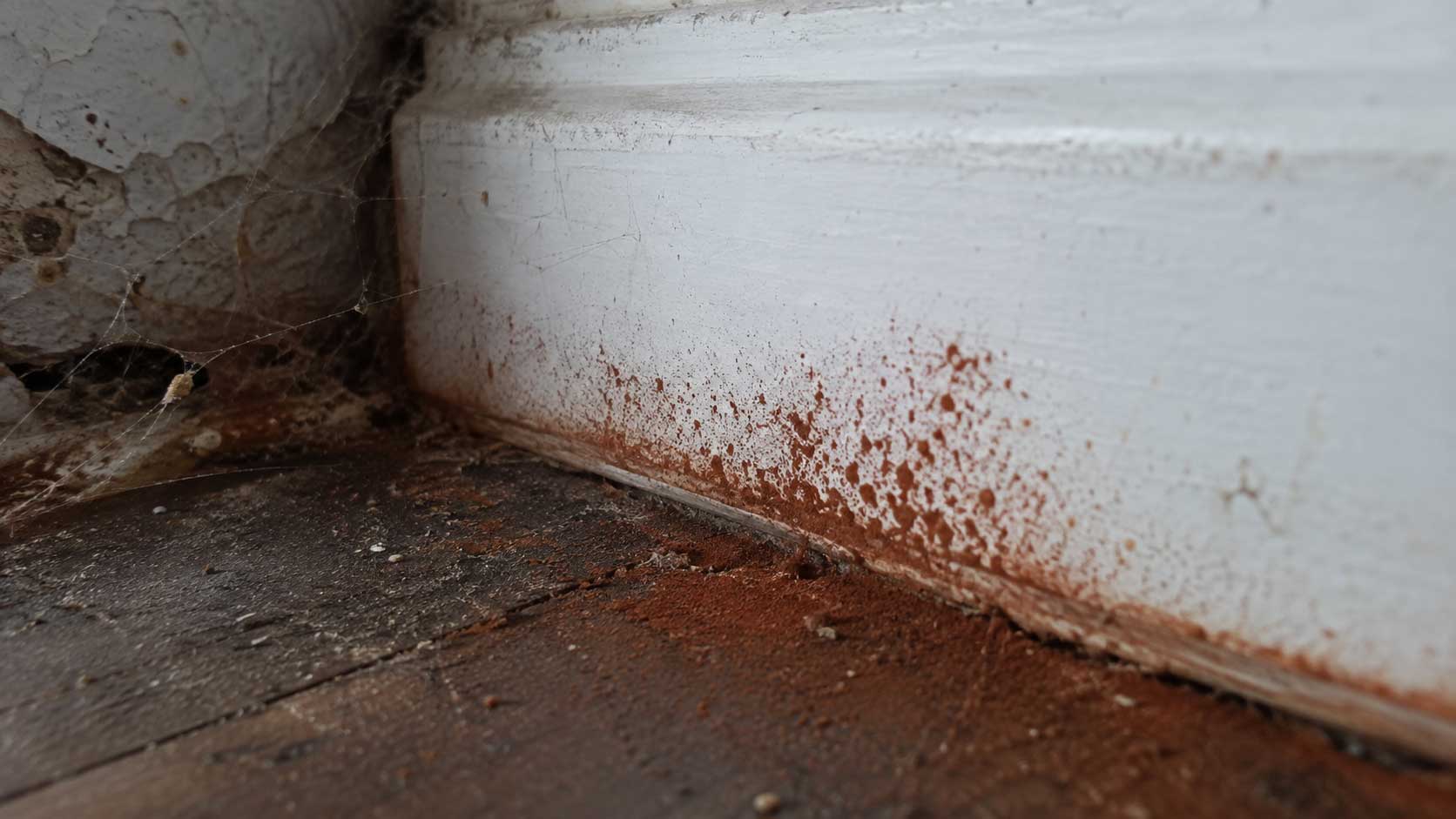
Spores can settle on unlikely surfaces
Fine spores can collect on cobwebs, pipes, ledges and the tops of skirting boards. They may appear some distance from the main fungal growth because air movement carries them around the room or void.
Rule out ordinary building dust
Brick dust, old plaster, rust and debris from building work can all look reddish or brown. The surrounding signs of decay and moisture need to support the identification.
Spores do not mean every nearby timber is infected
Spores are widespread. They need suitable moisture and temperature conditions before growth becomes established. Dry, sound timber should not be condemned merely because spore dust has settled on it.
Use spore dust as a reason to investigate
Where there is also fungal growth, dampness or timber cracking, the dust helps build the picture. The practical next step is to find the extent of affected timber and the moisture source.
Useful technical sources
These links provide background guidance. A particular building still needs its own inspection.