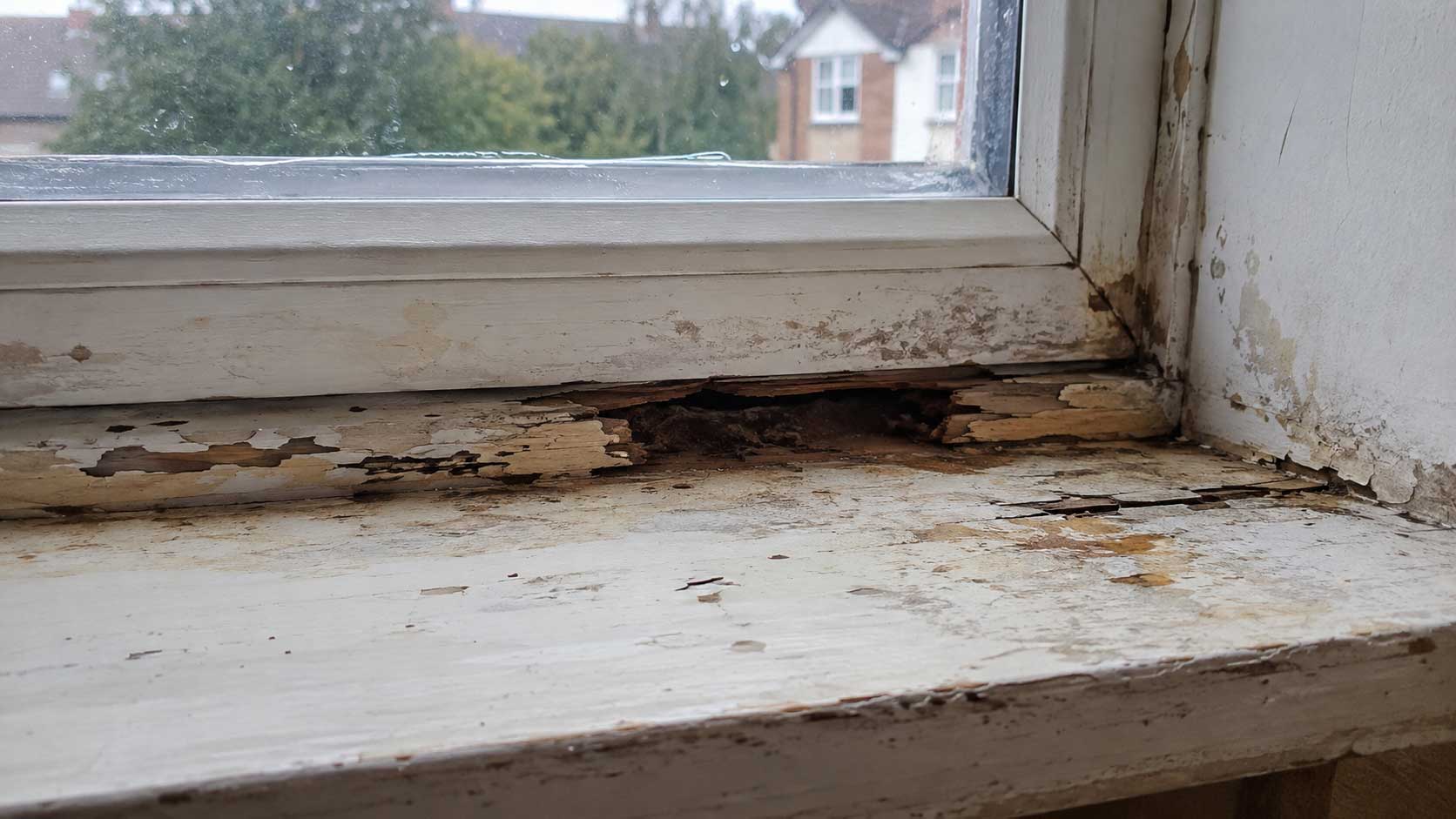
Look for a close link with dampness
Wet-rot damage commonly sits beside the source that has kept the timber wet: a leaking pipe, window, gutter, wet wall or failed roof detail. The decay may reduce quickly as you move away from that damp zone.
The timber may become soft or fibrous
Some wet rots leave wood pale and stringy, while others produce darker brittle decay. A probe can help identify loss of substance, but structural members should not be damaged unnecessarily during inspection.
Fungal growth may be modest
A badly weakened joist does not need to be covered in dramatic fungus. Long-term dampness and loss of strength can be more significant than surface growth.
Check what lies behind the visible timber
Window frames, joist ends and wall plates often meet damp masonry. Decay can extend into the concealed contact area even when the exposed face looks better.
Useful technical sources
These links provide background guidance. A particular building still needs its own inspection.