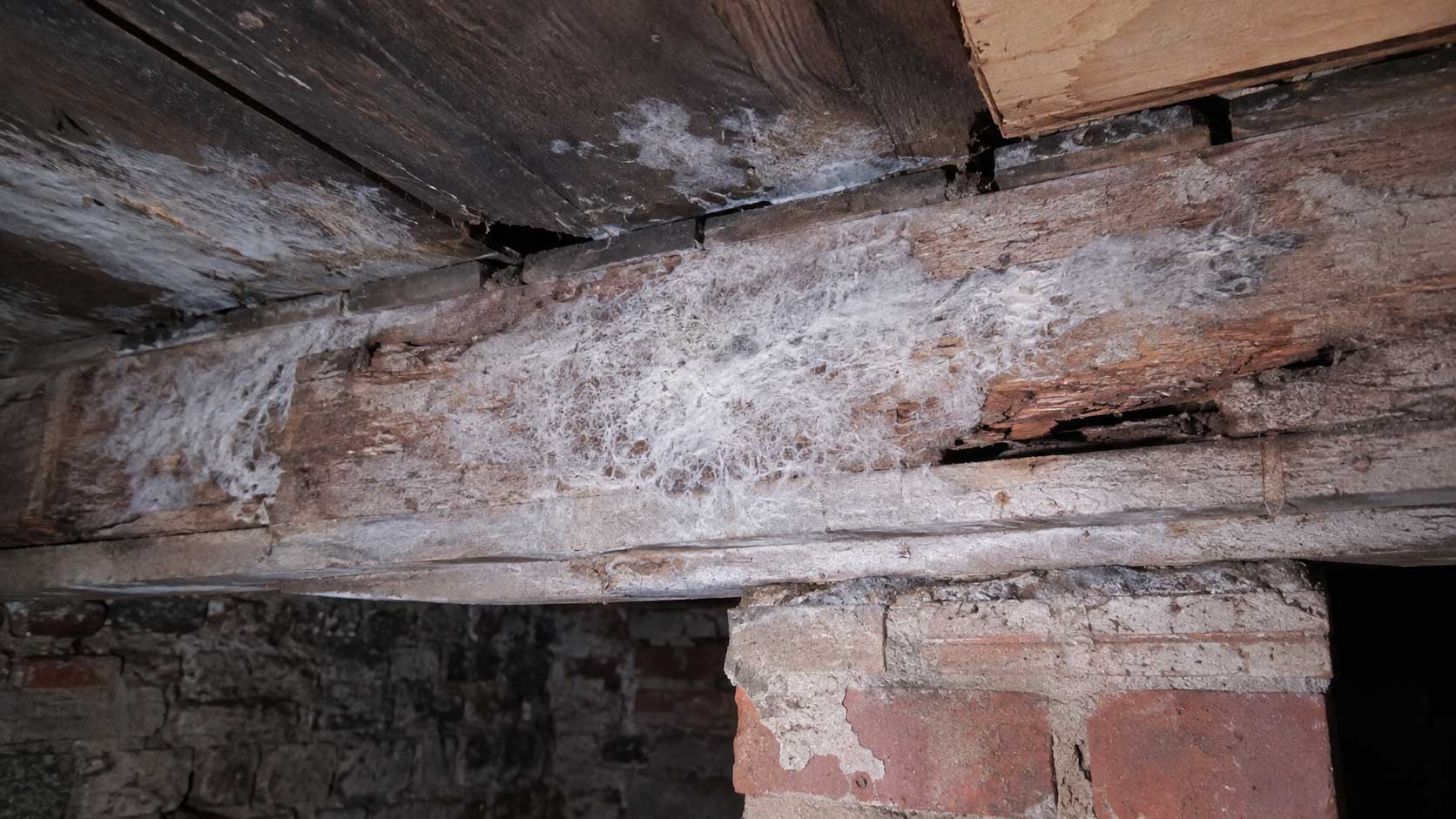
Not every fungus seen indoors destroys timber
Buildings contain many fungal organisms. Some indicate damp conditions without causing serious structural decay; others actively break down wood.
This is why identification matters. Treating every patch of fungal growth as dry rot can lead to unnecessary removal of sound material.
Decay changes the timber itself
Wood-destroying fungi use components of the timber as a food source. As decay progresses, the wood loses weight and strength. The surface appearance can vary considerably depending on the fungus, the timber species and how wet the area remains.
The extent of structural damage cannot always be judged from the amount of visible growth.
Drying changes the conditions
Decay fungi need suitable moisture conditions. Stopping water ingress and allowing the structure to dry can make the environment unsuitable for continued activity.
That does not magically restore timber that has already lost strength, but it can prevent further decay and may reduce the amount of treatment that is required.
The building defect still needs repair
Fungal decay beneath a bathroom, below a leaking valley or beside a defective downpipe will keep returning if the source is ignored. The moisture problem and the damaged timber should therefore be considered together.
In older buildings, the drying behaviour of walls and floors also matters, particularly where later impermeable materials have been added.
Useful technical sources
- Historic England — Timber Decay in Buildings and its Treatment
- Historic England — Timber Treatments and Pest Control
These links provide background guidance. A particular building still needs its own inspection.