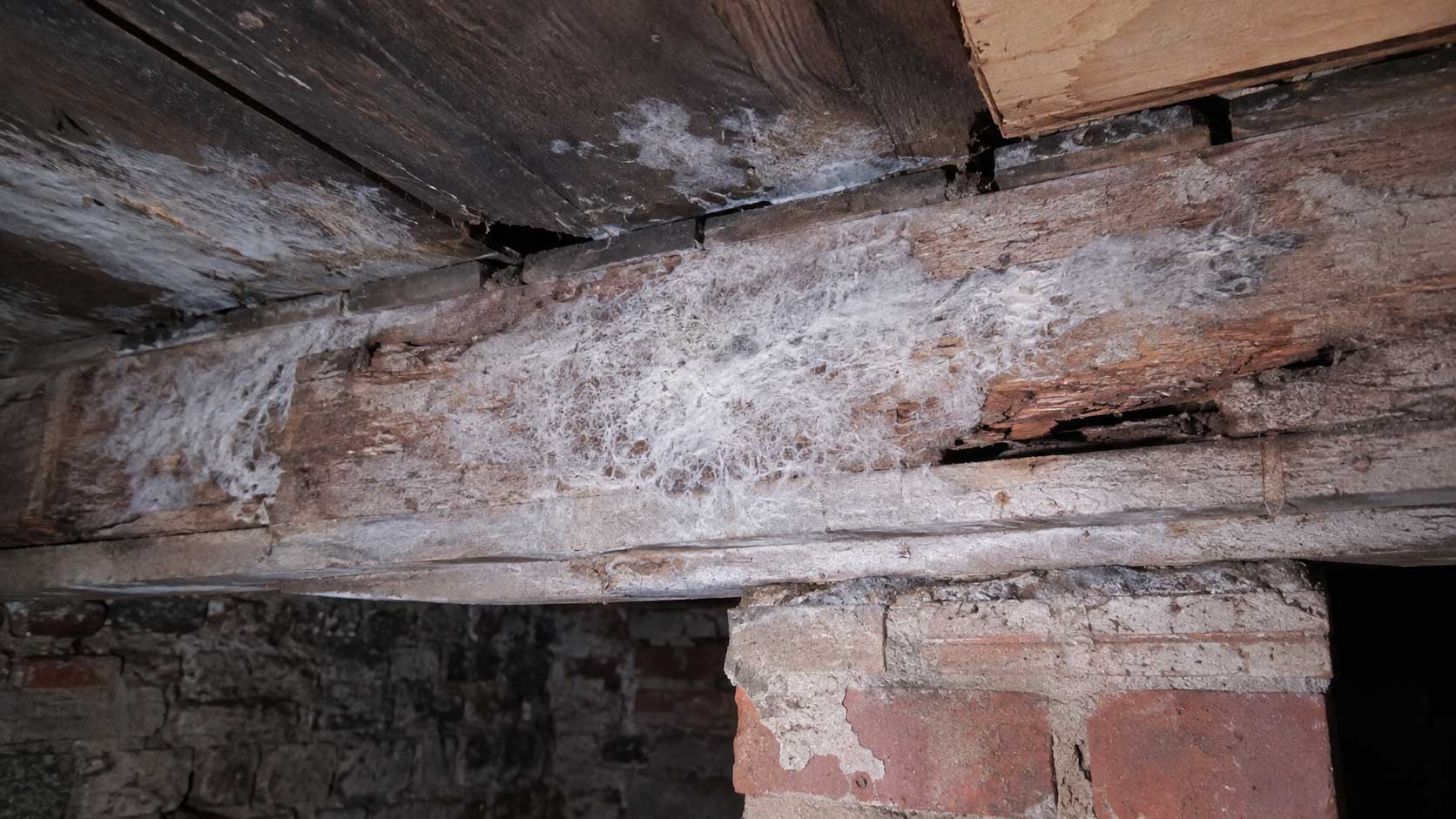
A floor can change before the fungus is obvious
Joists and boards can lose strength beneath the surface. A floor that has become springy or has dropped close to a damp wall deserves investigation, particularly if there has been a long-standing leak.
Fresh fungal growth may be hidden
The underside of floorboards, the back of skirting, enclosed joist pockets and spaces behind panelling can remain humid enough for growth while the room itself looks normal.
Dampness is often the first useful clue
A roof leak, wet cellar wall, defective shower or blocked sub-floor vent may be noticed before decay. Where structural timber is repeatedly wetted, inspecting it early can prevent a small building defect becoming a larger repair.
Do not wait for a perfect textbook appearance
Dry rot changes as it dries, ages and moves into different materials. A survey should consider the whole pattern rather than waiting for every classic sign to appear together.
Useful technical sources
- Historic England — Timber Decay in Buildings and its Treatment
- Historic England — Timber Treatments and Pest Control
These links provide background guidance. A particular building still needs its own inspection.