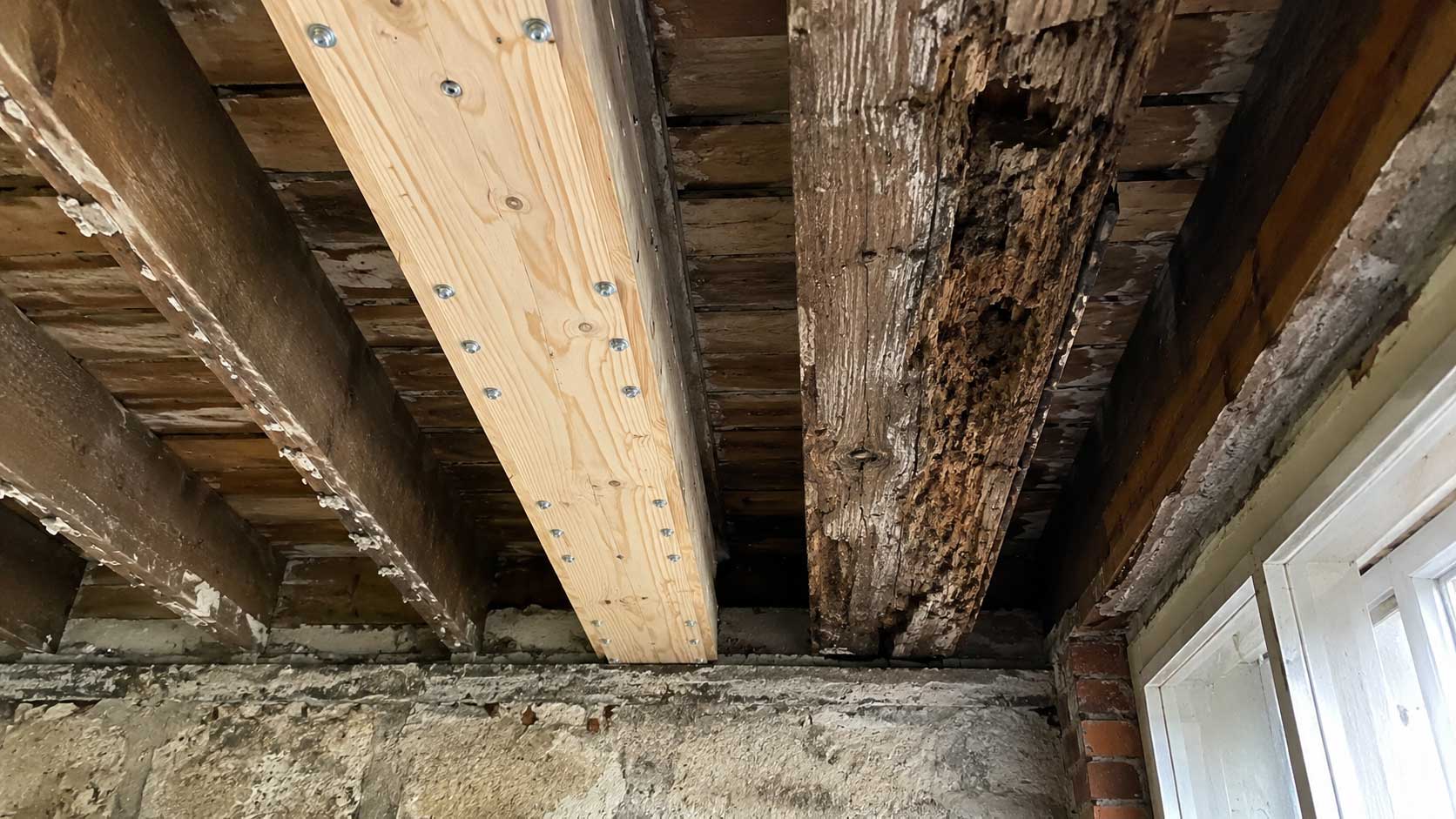
Stop the water first
A leaking roof, plumbing defect, damp wall or blocked ventilation can keep the environment suitable for decay. Until that source is corrected, treatment is addressing the symptom rather than the reason the fungus established.
Decide what timber is actually unsound
Timber that has lost significant strength may need to be removed or strengthened. Sound dry timber should not be discarded merely because it is near an outbreak.
Open up only as far as the evidence justifies
Some outbreaks require access behind plaster or below floors, but indiscriminate stripping can destroy sound building fabric. The extent should follow the moisture route, fungal growth and timber condition.
Chemical treatment is not automatically the whole answer
Historic England notes that understanding the organism and why damage occurred can reduce treatment or show that some treatment is unnecessary. Where chemicals are proposed, the product, location and reason for use should be clear.
Recheck the building after drying
The end of visible growth is not the only measure of success. Moisture levels, ventilation and repaired rainwater or plumbing defects should remain stable after the work is complete.
Useful technical sources
- Historic England — Timber Treatments and Pest Control
- Historic England — Timber Decay in Buildings and its Treatment
These links provide background guidance. A particular building still needs its own inspection.