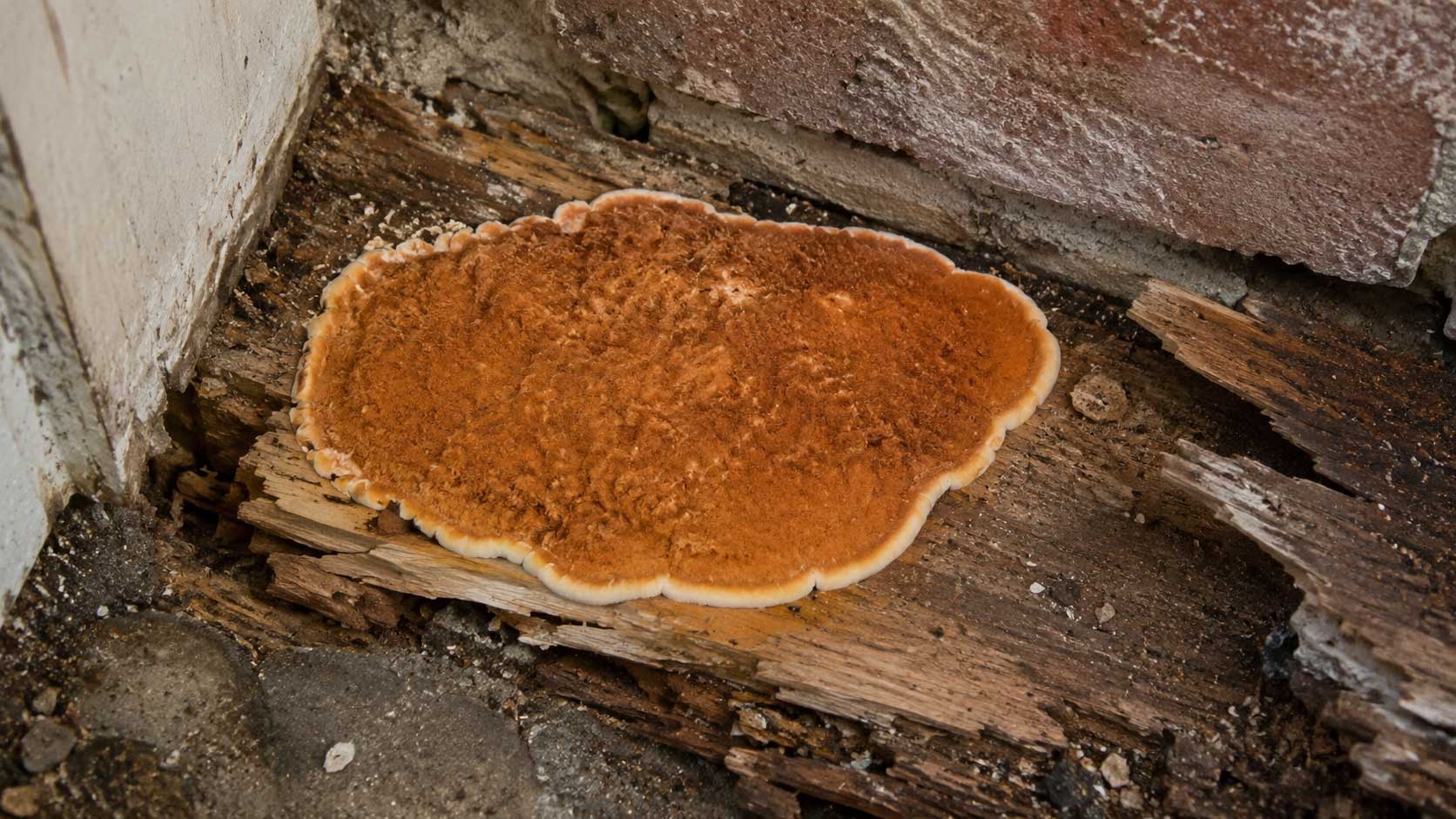
Why fruiting bodies appear
Fungi produce fruiting bodies as part of their reproductive cycle. In buildings, these structures may appear on timber, masonry or nearby surfaces where an established outbreak has access to suitable conditions.
Spore dust can spread beyond the outbreak
Rusty brown spores can settle on floors, ledges, cobwebs and stored items. The dust may therefore be easier to notice than the fruiting body itself.
The visible body does not define the whole affected area
Mycelium and strands can extend behind plaster, below floors or through cracks and joints. The survey should therefore follow moisture and timber condition beyond the obvious growth.
Do not treat the fruiting body as the cause
Removing it may tidy the appearance, but it does nothing about the dampness that allowed the fungus to develop. The water source, affected timber and surrounding hidden areas still need assessment.
Useful technical sources
These links provide background guidance. A particular building still needs its own inspection.