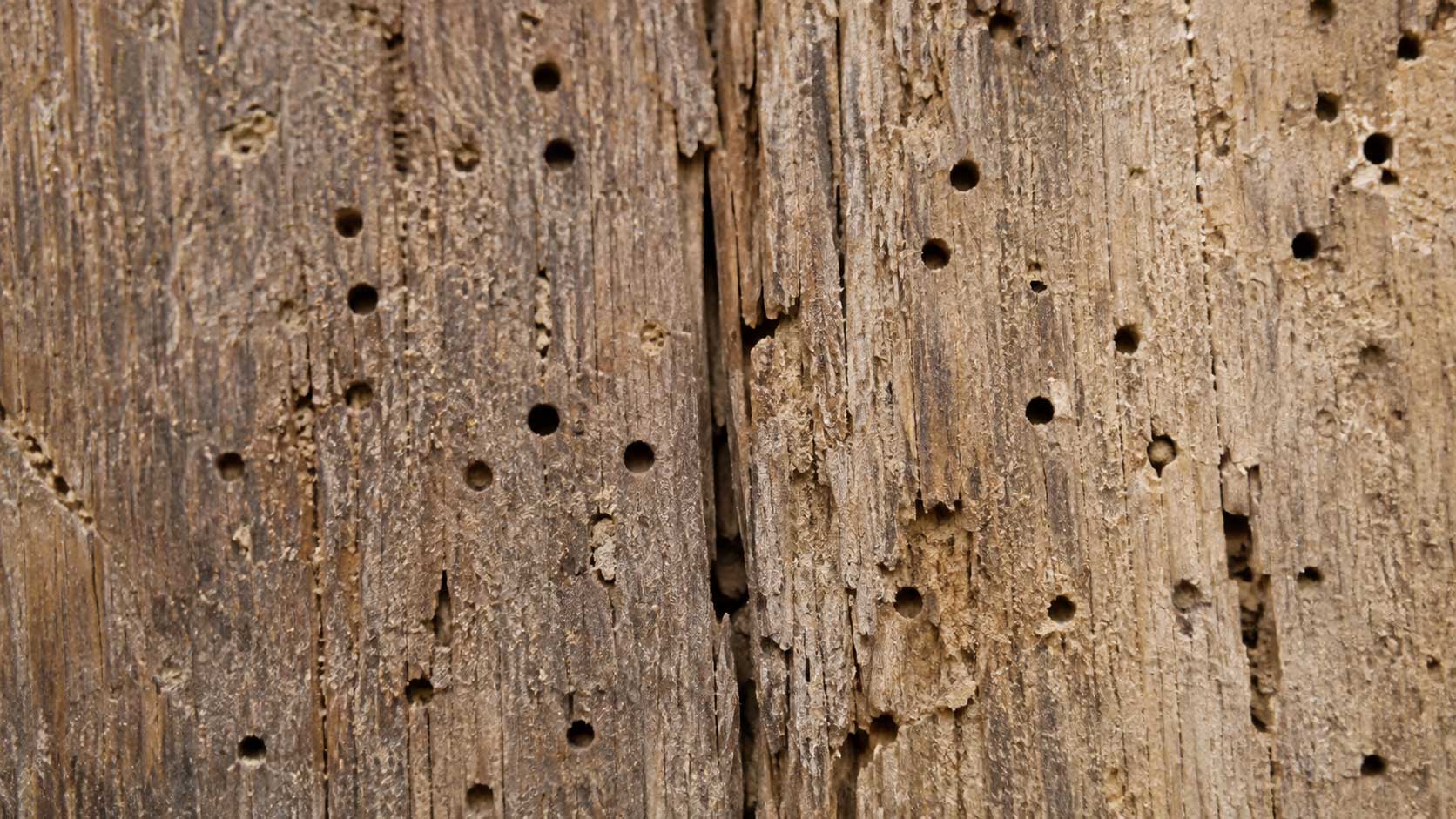
A hole can remain after the beetle has gone
Exit holes do not close when an infestation ends. Old roof timbers and floorboards can therefore carry evidence of insect attack for decades.
Fresh activity is more likely where there is new frass, recent-looking holes, live insects or continuing damage. The exact evidence varies with species.
Not every part of the timber is attacked equally
Some wood-boring insects mainly attack sapwood rather than the denser heartwood. A timber can therefore look heavily perforated at the surface while retaining substantial strength deeper inside.
That is one reason wholesale replacement based only on visible holes can be excessive.
Moisture can influence insect attack
Some beetles favour timber that has already been damp or affected by fungal decay. Correcting a moisture problem can therefore be part of controlling the conditions that made the timber attractive in the first place.
Identify before treating
The insect species, whether it is active and the extent of structural damage should be established before deciding on treatment. In historic buildings, unnecessary chemical treatment can damage other interests such as bats as well as disturbing original fabric.
Useful technical sources
- Historic England — Timber Treatments and Pest Control
- Historic England — Timber Decay in Buildings and its Treatment
These links provide background guidance. A particular building still needs its own inspection.